

Aesthetics Congress. XXIV. Dental World – International Dental Exhibition and Congress
/education-service/media/default/51322/d21e73b5.jpeg)
Federico Ferraris
Detalles del curso
Conferencistas
Evento
Programa
🌟FREE participation in the event for owners of Premium +48 and Premium +36 club access.
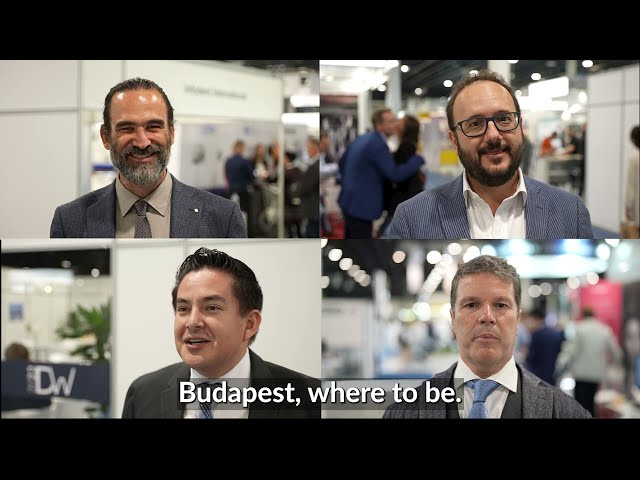
For more than two decades now, the leading players in dentistry have been meeting in Budapest to gain knowledge, experience and expertise.
Congress participants and international experts from 50+ countries from all over the world, with a special focus on the Central-Eastern European countries, will be able to attend 5 international congresses. The presence of more than 300 dental manufacturers will guarantee first-hand experience of all the innovations that will be seen in dental practices in the years to come. In addition, live surgeries, demos, workshops and practical training sessions will provide visitors with knowledge that can be applied immediately, while the social event will help participants to get to know not only Budapest but also each other better.
Keynote speaker – Dr. Federico Ferraris.
IMPORTANT: You can also purchase:
– "All access" ticket (all the 5 congresses for 3 days long)
– "VIP" ticket (all the 5 congresses + three-day lunches, soft drinks and VIP parking).
PROGRAM
Thursday, October 10
9.20-9.30
Dr. András Volom, Dr. Ádám Gombos
Opening
9.30-12.30
Dr. Michael Melkers
Keeping Your Restorations and Reputation Intact – Case Planning and Occlusion in Everyday Practice
Failure visits our practices in many forms and on many materials. In this program we will explore the forces that threaten our success and what options we have to address them. With a balance of hard/technical and soft/communication skills, Dr. Melkers will take attendees on a journey with patient stories and their cases in application. From single tooth to more advanced care, skills will be shared that can be put to use for all levels of clinicians.
Learning objectives:
- Learn to recognize critical parafunctional red flags and why they matter
- Appreciate the balance between function, parafunction & aesthetics
- Learn realistic management of destructive forces in restorative dentistry
- Understand how to evaluate destructive vs desirable occlusal contact
- Appreciate the benefits and considerations in altering vertical dimension
- Experience concepts in case application.
12.30-14.00
Lunch break
14.00-15.30
Dr. Ivan Raychev
Contemporary Strategies in Additive Rehabilitation of Tooth Wear
This lecture presents a concise overview of advanced strategies in the additive rehabilitation of tooth wear, emphasizing the judicious use of direct and indirect restoration techniques alongside the integration of digital technologies. The treatment protocol initiates with the conservative restoration of the lower and upper frontal segments.
Through this approach, we not only restore the worn frontal teeth, enhancing aesthetics and function, but also elevate the vertical dimension of occlusion (VDO). This elevation is crucial for creating sufficient space to restore the posterior segments while simultaneously ensuring the mandible's central position is preserved. The lecture delves into various composite restoration techniques for both frontal and distal teeth segments, transitioning into a discussion on the seamless integration of direct and indirect methods.
Furthermore, we explore the role of digital protocols in enhancing the predictability and functionality of the outcomes. This comprehensive approach not only preserves the existing healthy tooth structures but also aims at achieving functional and aesthetic rehabilitation of the masticatory apparatus, illustrating the process through documented real-life clinical cases.
15.30-17.00
Dr. Jarett Hulse
Introduction to Clear Anatomical Matrixing Systems and Injection Moulding Composite Techniques
Many dental practitioners have trouble with staining, layering, chipping and overhangs in anterior and posterior composite restorations. The Bioclear Method is a technique utilizing clear anatomical shaped matrices to create strong beautiful, tooth-shaped, stain resistant restorations. It is a specific technique with multiple steps along with new armamentarium that can transform how one approaches composite restorations.
The closing of black triangles, a cosmetic issue that with traditional composite techniques most clinicians find difficult, or impossible, to do. While there is a learning curve and a specific sequence that should be followed, this method is doable by any clinician, not just those with golden hands. The purpose of this lecture is to introduce you to what the Bioclear Method is and all the steps involved in getting started.
Friday, October 11
9.20-9.30
Dr. András Volom, Dr. Ádám Gombos
Opening
9.30-12.30
Dr. Federico Ferraris
Direct vs Indirect Restorations in Esthetic Area: Clinical Protocols
The ever-increasing demand of esthetic results and restorative treatments from patients forces the clinician to provide a perfect appearance outcome and to be owner of different types of treatments and approaches. The indications about indirect restorations or direct restorations are becoming ever less absolute: considering many clinical aspects you can opt for a protocol rather than the other. The versatility of the composite resin, its possibility of layering intraorally, the ease of repair and the fairly good prognosis in the medium and long period, making it a reliable material and the tendency of new materials to improve the wear resistance and the stability of the surface candidates it in many cases as a worthy substitute of ceramic materials.
By contrast, ceramic materials, often considered the gold standard for colour characteristics and mechanical and physical properties, see an increase in the ability to produce restorations with minimum thicknesses while maintaining dimensional stability, prognosis and aesthetics. The choice, therefore, to adopt a direct or indirect approach is always less obvious, but, on the contrary, offers to dentists greater possibility of diversification in restorative. Finally, many aspects could be discussed as: indications, detailed clinical protocols, communication protocols, esthetic appearance, predictability and durability.
Learning objectives:
- Indications and communication with different types of esthetic restorations
- Clinical protocols for direct composite restorations
- Clinical protocols for indirect ceramic restorations.
12.30-14.00
Lunch break
14.00-15.00
Dr. Igor Ristic
New Technologies in the Dental Environment: From Confusion to Clinical Excellence
The rapid evolution of technology within the dental field has sparked both excitement and confusion among practitioners, patients, and stakeholders alike. This presentation aims to demystify the diverse array of new technologies and their applications in clinical practice, ultimately guiding the dental community towards achieving clinical excellence.
As advancements such as digital dentistry, and artificial intelligence gain traction, dental professionals are faced with the challenge of integrating these tools into their workflows effectively. The presentation will begin by outlining the key innovations reshaping the dental landscape, including 3D printing, intraoral scanning, and advanced diagnostic imaging technologies. By providing clinicians with a comprehensive overview of these tools, we will highlight their advantages in enhancing diagnostic accuracy, treatment planning and patient outcomes.
Moreover, we will address the common barriers that lead to confusion, such as the learning curve associated with new technologies and concerns about cost-effectiveness. Our discussion will include evidence-based strategies for successful implementation, emphasizing the importance of continual education and training. By fostering a culture of innovation and adaptability, dental practices can overcome resistance and embrace new methodologies that enhance both operational efficiency and patient care.
Finally, the presentation will showcase real-world case reports demonstrating the positive impact of technology on clinical practice. By illustrating tangible benefits, we aim to inspire dental professionals to embrace these advancements, thus transforming confusion into confidence. Attendees will leave equipped with actionable insights, empowering them to navigate the digital dental landscape toward achieving optimal clinical excellence in their practices.
15.00-16.00
Dr. Louis Hardan
Mobile Dental Photography (MDP): The New Era of Dental Documentation And Communication
Photography is powerful in dentistry, its numerous applications such as diagnosis, treatment planning, legal documentation, publishing and lecturing has made digital photography a standard of care in modern dental practices.
Nowadays the DSLR (Digital Single Lens Reflex) cameras are widely used in dentistry to take high definition macro images.
Recently, smartphones have come a long way in digital photography due to recent technology development; with an appropriate management of light and specific accessories, intra-oral and extra-oral photography and videography became possible in an easy way.
The purpose of this lecture is to demonstrate the capacity of these devices to take high quality dental pictures. Those pictures are useful in different types of documentation and communication, in a feasible teachable and repeatable way, by everyone and for everyday practice.
16.00-17.00
Dr. Margarida Henrique
Aesthetic Smile Planning – The Road to a Successful Treatment
Today more and more patients seek aesthetic dental treatments. As dental professionals, we should be able to treat them in order to restore not only their esthetics, but also their biology, structure and function, giving them a natural restoration of their smile. For that to be accomplished, an extensive documentation with photos and videos and a careful treatment plan is fundamental before starting the treatment. We need to consider several parameters, such as morphological characteristics of each individual tooth (anterior tooth basic anatomy), their alignment and position in the arch, their color and intra-oral criteria that define an esthetic smile composition, such as: midline line, smile line, incisors proportion and dominance, axial inclination of anterior teeth, vestibular axial inclination of posterior teeth, size of the contact areas, cervical and incisal embrasures, and gingival architecture.
Saturday, October 12
9.20-9.30
Dr. András Volom, Dr. Ádám Gombos
Opening
9.30-11.00
Dr. Riccardo Ammannato
Worn Dentition? Direct and Indirect Adhesive Restorative Approach
The main goal of this lecture is to provide, indications and protocols to diagnose and treat severe worn dentition through a new no prep “hybrid” approach increasing the VDO: 1) a direct workflow “The Index technique”; 2) The lecture will also focus on when and how to bond on worn dentition, additive partial indirect restorations (onlays/overlays) in composite and/or ceramic, depending on the indications. All the step by step protocols will be addressed through step by step images and videos on patients, in order to have a clear over view of this hybrid (direct-indirect) technique through an analog and digital workflow.
Learning objectives:
- How to diagnose worn dentition (corrosion; attrition; abrasion; abfraction)
- Opening the VDO and planning the treatment plan
- The indications and protocols for a no prep direct adhesive approach: “The Index Technique”
- The indications and protocols for a minimal invasive indirect adhesive approach through composite and/or ceramic onlays/overlays.
11.00-12.30
Dr. Alina Ruzanova
Making Sense of Complex Cases
There are many questions that come with planning difficult cases. Sometimes too many for us to handle. Starting with facially driven treatment planning and setting final goals before start, will help you to have clear vision throughout the treatment.
Questions covered in lecture:
- Where to start planning a complex case?
- How to sequence the treatment?
- How much I open the VDO?
- How to I divide the space between arches?
- Which goal to set for final occlusion?
12.30-14.00
Lunch break
14.00-15.00
Dr. János Grosz
Ethics or Esthetics? What Goes Around, Comes Around?! – Avoid Failures with Ceramic Veneers
Treatment with ceramic veneers is a well documented, widely accepted treatment option today. It can easily be standardized, yet still, many doctors face serious difficulties during these treatments, resulting in sub-standard care and unhappy patients. With ethical attitude and humility towards the profession, respecting some easy steps could ensure avoidance of these failures. In my lecture, I will share some of my thoughts about this topic.
15.00-16.00
Dr. Pawel Paszkiewicz
Teamwork & Planning in Digital Implant Prosthetics
What is the digital workflows in general?
Less hours spent on corrections and functional alterations, better connection to our patients, which are getting a better understanding what we’re doing, because they see more - who builds a house nowadays without project and 3D design? The dentistry is like building little houses but inside patient’s mouth, so it is good to have everything under control at every stage of our construction site 😉
The prosthodontist is an inventor - the lab follows the design, with double-sided respect to each other. Intraoral scans, photos, videos, accurate occlusion, facescans, either digital facebow or motion tracking devices and CBCT Tomography let us build a virtual version of our patient, in a repeatable procedure. That virtual patient can be consulted with any specialist anywhere - helping the prosthodontist to create predictable, safe and solid treatment plan.
Prosthodontics
Pathologies
Conferencistas 1
/education-service/media/default/51322/d21e73b5.jpeg)
Specialist in aesthetic and operative dentistry with focus on minimally invasive restorative approaches using advanced adhesive techniques and digital workflows. Practices in Alessandria, Italy, collaborating with specialist dental clinics in Florence and Piacenza.
Over 25 years of clinical experience in direct and indirect aesthetic restorations, ceramic veneers, and CAD/CAM dentistry. Known for integrating digital smile design protocols with precision adhesive bonding techniques for predictable aesthetic outcomes.
Visiting Professor in Aesthetic Dentistry at CEU San Pablo University in Madrid, Spain, and University of Pisa, Italy. International lecturer presenting in over 30 countries across five continents. Vice-President of AIC (Italian Academy of Conservative Dentistry) for 2016-2019. Active member of Italian Academy of Esthetic Dentistry (IAED) since 2011. Founding member of Massironi Study Club and ADHESTHETICS. Member of Editorial Board of International Journal of Esthetic Dentistry since 2010.
DDS from University of Genoa, Italy (1999). National President of AISO (Italian Association of Dental Students) 1997-1999. DSD (Digital Smile Design) Master since 2013. Named among top 100 physicians worldwide in 2025 by Global Summits.
Evento
/education-service/media/default/59662/83a5fa29.jpg "Venue location")
Hungexpo Fair Center
Albertirsai út 10, 1101, Budapest, Hungary
Organizador

Event Organizer Hungary Kft
Pocos votos