



Fórceps mandibulares para molares
DeMedesy
Código 250073
No está disponible
En este momento, el producto que le interesa no está disponible. Vaya al catálogo para encontrar una amplia gama de productos similares
No está disponible
En este momento, el producto que le interesa no está disponible. Vaya al catálogo para encontrar una amplia gama de productos similares
Descripción
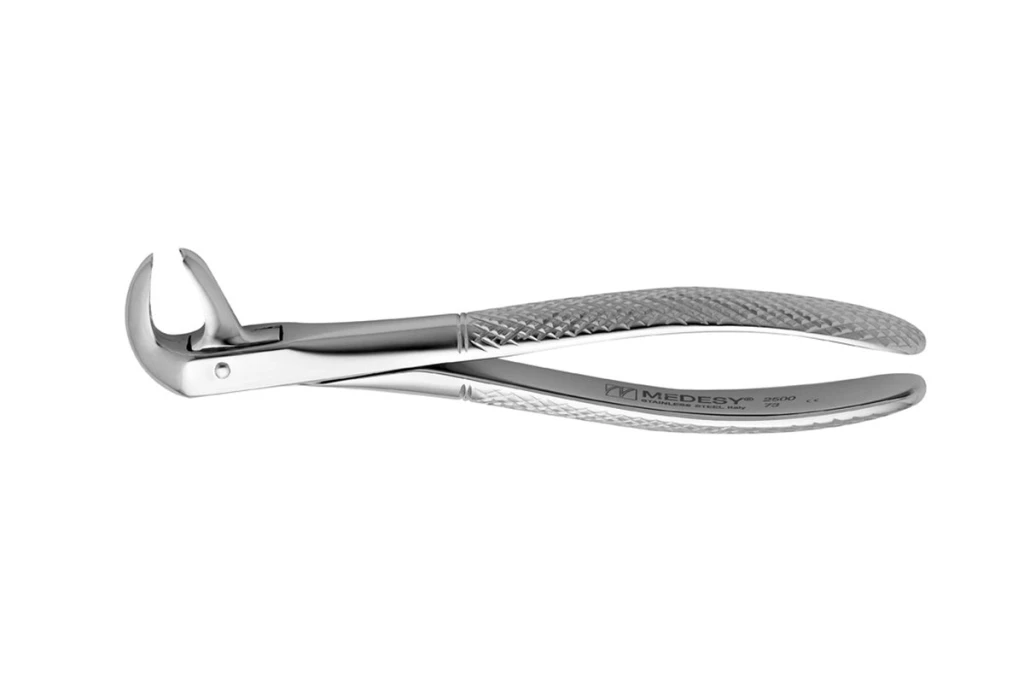
Fórceps mandibulares para molares
Mandibular forceps molar are specialized dental instruments designed for the extraction of molar teeth in the lower jaw. Understanding their common characteristics is essential for dental professionals to ensure effective and safe extractions. Below are the key features that define mandibular forceps molar:
Design Features
- Curved Beaks: The beaks of mandibular forceps molar are typically curved to accommodate the shape of the molar teeth, allowing for better access and grip during extraction.
- Wide Beaks: The beaks are wider compared to other forceps, providing a larger surface area to grasp the tooth securely without causing excessive trauma to the surrounding tissues.
- Long Handles: These forceps often feature longer handles, which provide the operator with increased leverage and control while applying rotational and lateral forces during the extraction process.
Material Composition
- Stainless Steel: Most mandibular forceps molar are made from high-quality stainless steel, ensuring durability, resistance to corrosion, and ease of sterilization.
- Lightweight Construction: The design is often lightweight, allowing for ease of use and reducing hand fatigue during prolonged procedures.
Functional Characteristics
- Angled Design: The angled design of the forceps helps in reaching the posterior molars effectively, which can be challenging due to limited visibility and access.
- Textured Grip: Many models feature a textured grip on the handles, enhancing the operator's control and preventing slippage during use.
Types of Mandibular Forceps Molar
- Universal Mandibular Forceps: These are designed to extract both first and second molars, making them versatile for various extraction scenarios.
- Specific Mandibular Forceps: Some forceps are specifically designed for either the first or second molars, providing a more tailored approach to tooth extraction.
Usage Considerations
- Indications: Mandibular forceps molar are primarily used in cases of caries, periodontal disease, or other conditions necessitating tooth extraction.
- Technique: Proper technique is crucial; the operator must apply appropriate force and angle to minimize trauma and ensure a successful extraction.
Understanding these common characteristics of mandibular forceps molar can significantly enhance the efficiency and safety of dental extractions, ultimately benefiting both practitioners and patients alike.
Mandibular forceps are essential tools in the field of dentistry, particularly for the extraction of molars in the lower jaw. Understanding the specific indications for their use can enhance the efficiency and effectiveness of dental procedures. Below are key indications for the use of mandibular forceps molar:
1. Extraction of Mandibular Molars
Mandibular forceps are specifically designed for the extraction of lower molars. Their shape and design allow for optimal grip and leverage, making them ideal for:
- Single-rooted molars: These forceps are effective for extracting single-rooted mandibular molars, such as the first and second molars.
- Multi-rooted molars: They can also be used for multi-rooted mandibular molars, providing the necessary force to dislodge the tooth from the socket.
2. Compromised Tooth Structure
When a molar has significant decay, fracture, or other structural compromise, mandibular forceps can be indicated for:
- Severely decayed teeth: Teeth that are too damaged to restore may require extraction, and forceps can facilitate this process.
- Fractured roots: In cases where the roots are fractured, these forceps can help in removing the remaining tooth structure effectively.
3. Periodontal Disease
Advanced periodontal disease can lead to tooth mobility and loss of supporting structures. Mandibular forceps are indicated for:
- Mobile molars: Teeth that exhibit significant mobility due to periodontal issues can often be extracted using these specialized forceps.
- Infected teeth: Teeth with abscesses or severe infections may require extraction to prevent further complications.
4. Surgical Extractions
In surgical extractions where access to the tooth is limited, mandibular forceps can be utilized for:
- Impacted molars: For impacted lower third molars, these forceps can assist in the extraction process after the necessary surgical access has been achieved.
- Bone removal: When bone removal is necessary, these forceps can help in extracting the tooth once the surrounding bone has been adequately managed.
5. Pediatric Dentistry
In pediatric dentistry, mandibular forceps can be used for:
- Primary molars: The extraction of primary molars in children can be effectively performed using these forceps, ensuring a gentle approach.
- Transitional teeth: As children transition to permanent dentition, mandibular forceps can assist in the removal of transitional teeth.
6. Patient Comfort and Safety
Using the appropriate forceps can enhance patient comfort and safety during extractions. Indications include:
- Minimal trauma: Mandibular forceps are designed to minimize trauma to surrounding tissues, promoting quicker healing.
- Controlled extraction: The design allows for better control during the extraction process, reducing the risk of complications.
In summary, the indications for the use of mandibular forceps molar in dentistry are diverse and crucial for effective dental practice. Their design and functionality cater to various extraction scenarios, ensuring optimal outcomes for patients.
In the field of dentistry, the choice of instruments can significantly impact the efficiency and outcomes of procedures. One such essential tool is the mandibular forceps molar, specifically designed for the extraction of lower molars. Here are some key benefits of using mandibular forceps molar in dental practice:
Enhanced Control
Mandibular forceps molar are designed to provide dentists with superior control during the extraction process. The ergonomic design allows for a comfortable grip, enabling practitioners to apply the necessary force with precision.
Improved Access
The shape and angle of mandibular forceps molar facilitate better access to the lower molars, which can often be challenging due to their position in the mouth. This improved access reduces the risk of damaging adjacent teeth and surrounding tissues.
Minimized Trauma
Using mandibular forceps molar can lead to less trauma to the surrounding soft tissues. The design allows for a more gentle approach, which can result in quicker healing times and less postoperative discomfort for patients.
Efficient Extraction
These forceps are specifically engineered to grasp and mobilize molars effectively. This efficiency can lead to quicker extraction times, benefiting both the dentist and the patient.
Durability and Reliability
Mandibular forceps molar are typically made from high-quality stainless steel, ensuring durability and longevity. This reliability means that dental practitioners can depend on these instruments for consistent performance over time.
Versatility
While primarily designed for molar extractions, mandibular forceps can also be used in various other dental procedures, making them a versatile addition to any dental toolkit.
Patient Comfort
By utilizing mandibular forceps molar, dentists can enhance patient comfort during extractions. The design minimizes the amount of force required, which can lead to a more pleasant experience for the patient.
Reduced Need for Additional Instruments
The effectiveness of mandibular forceps molar often reduces the need for supplementary instruments during the extraction process. This streamlining can lead to a more efficient workflow in the dental practice.
Training and Familiarity
Many dental professionals are trained in the use of mandibular forceps molar, making them a familiar tool in the practice. This familiarity can lead to increased confidence and skill in performing extractions.
- Enhanced control during procedures
- Improved access to difficult-to-reach molars
- Minimized trauma to surrounding tissues
- Efficient extraction process
- Durability and reliability for long-term use
- Versatility in various dental procedures
- Increased patient comfort during extractions
- Reduced need for additional instruments
- Familiarity among dental professionals
No está disponible
En este momento, el producto que le interesa no está disponible. Vaya al catálogo para encontrar una amplia gama de productos similares